

B2B Semi-Autonomous Transfers
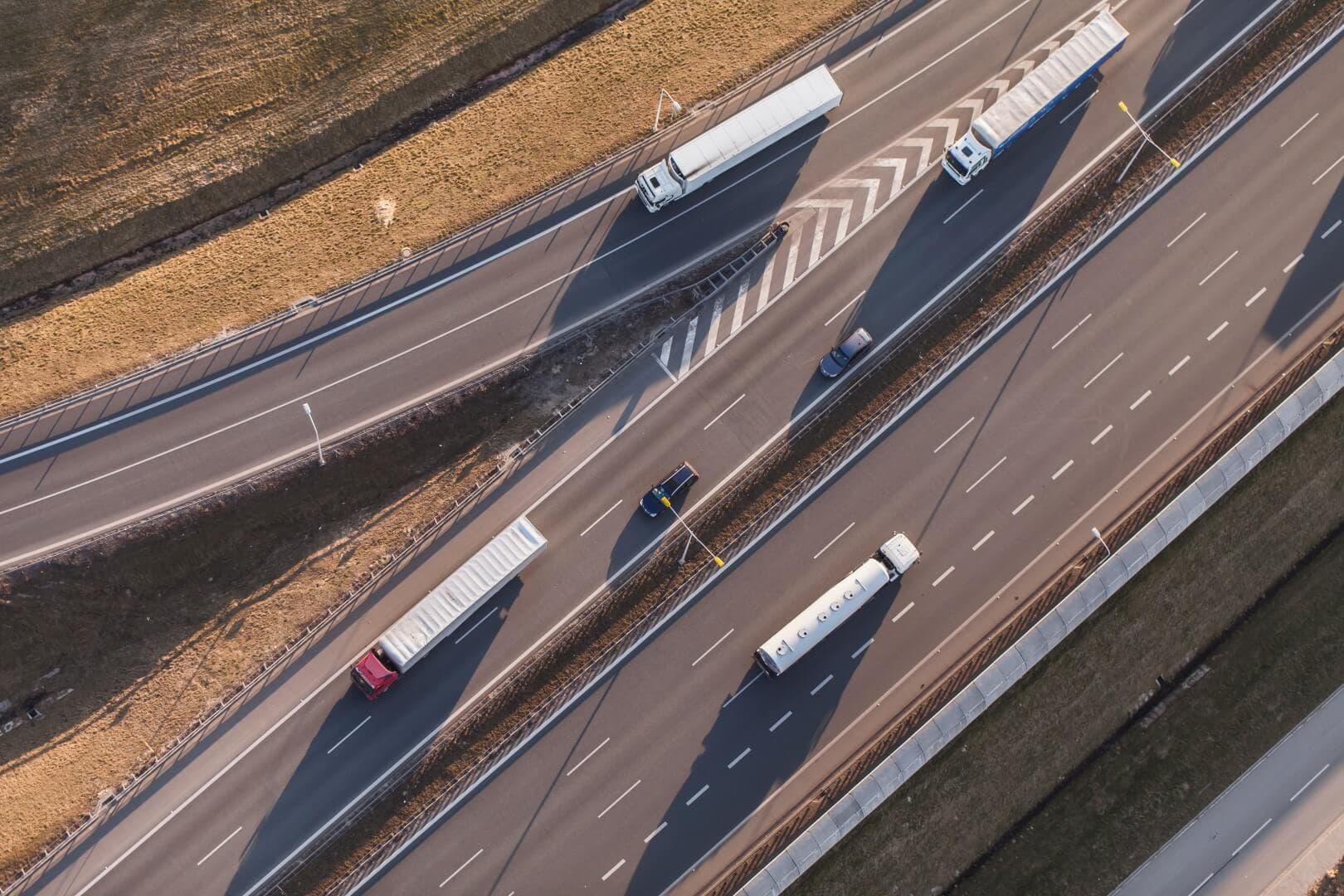
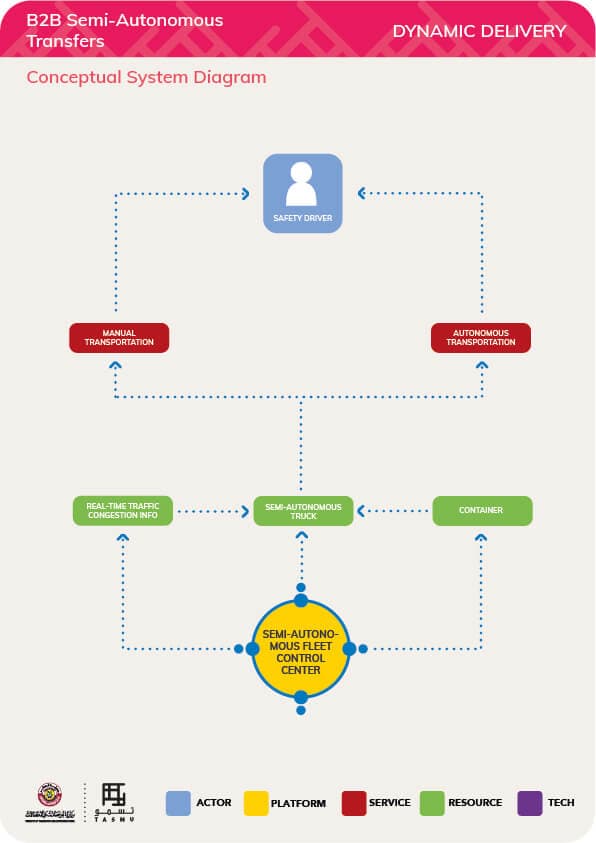
Provide automated container delivery from ports to business warehouses to maximize fuel efficiency and reduce road congestion. Semi-autonomous trucks leverage vehicle-to-vehicle communication and platooning capabilities to move in formation along designated highway lanes.
Project Owner
Logistics OperatorsImpacted Stakeholders
Key Benefits
Reduced Traffic Congestion
Semi-autonomous vehicles reduce tailbacks otherwise caused by slow-moving trucks. Similarly, they enhance traffic flow and improve road safety.
Reduced Environmental Impacts
Enabled by connected vehicles, platooning allows for trucks to travel in formations, saving on energy consumption and reducing associated emissions.
User Journey
1
Trucks analyze different options and pick the fastest route to their destination
2
3
4
5
Potential Service Features
- •Vehicle to Vehicle
- •Voice Commands
- •Vehicle to Infrastructure
- •Autonomous Driving Mode
Implementation Analysis
Implementation Timeline
ShortMediumLong
Regulatory Conduciveness
FavorableChallengedComplex
Technology Commercial Viability
Currently ViableViable in Short TermViable in LongTerm
Investment Requirements
LowMediumHigh
Key Implementation Considerations
1
Policies for semi-autonomous truck deployment on public roads (e.g. platooning)
2
Insurance coverage for autonomous vehicle deliveries
3
Policies for truck traffic bans
Conceptual Diagram
Relevant Tech Solutions