
Connected Vehicle (V2V)
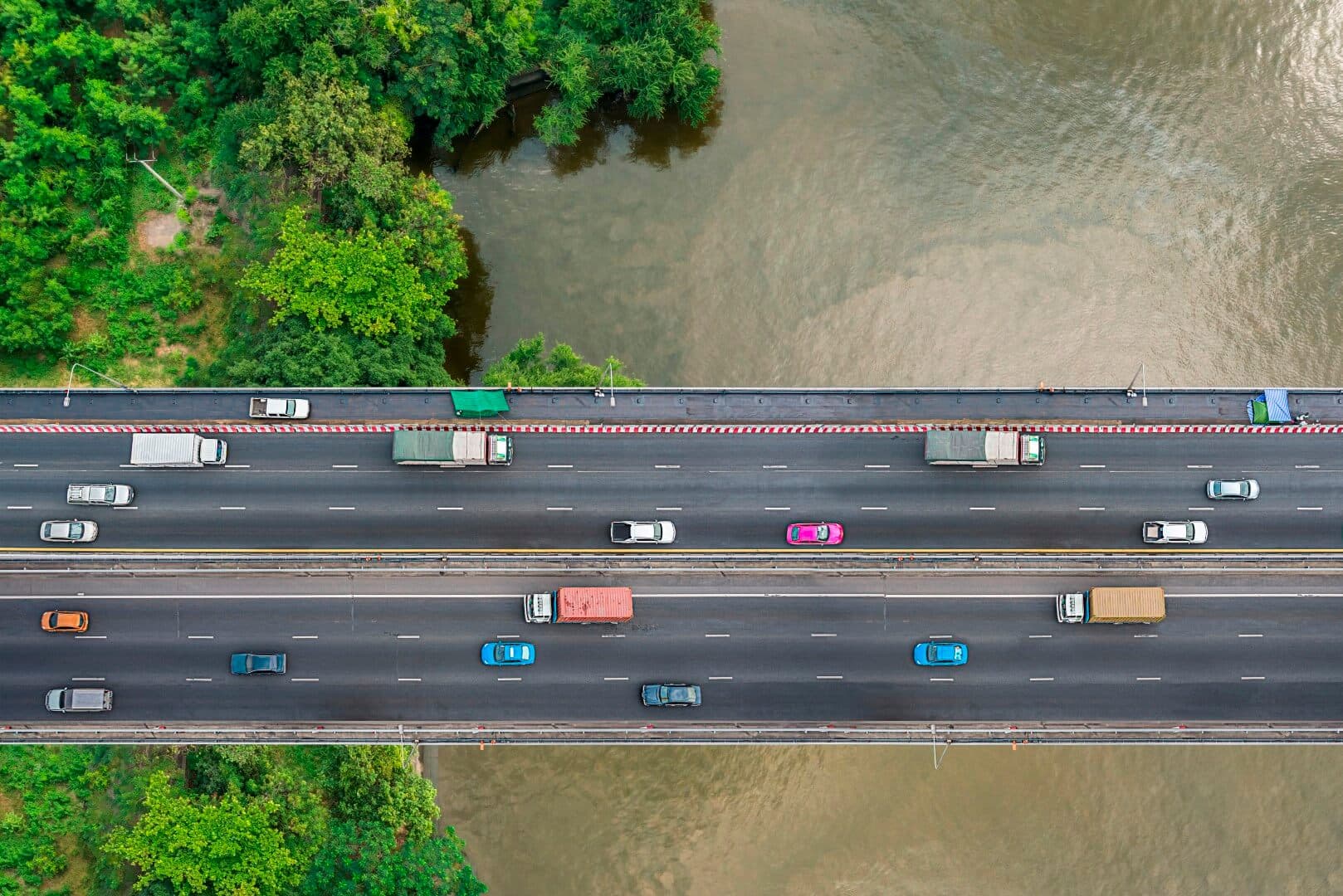
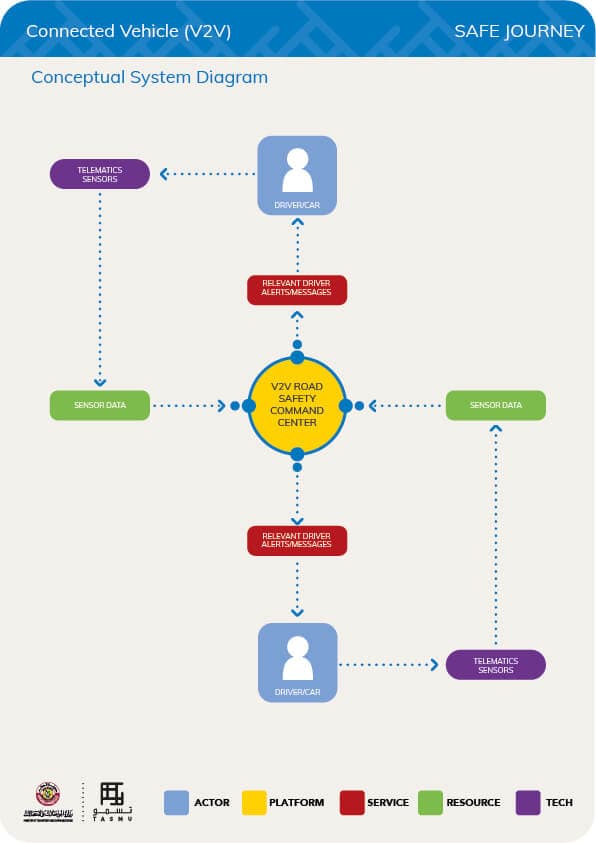
Equip vehicles with smart devices measuring telematics data such as speed, acceleration and deceleration, slopes and curves. The Connected Vehicle (V2V) communicates insights (e.g. accident detection, hazardous roads, blind spot detection) to nearby connected vehicles, creating a safe network of drivers and providing supportive information for fast decision-making.
Key Benefits
Enhanced Surroundings Awareness
Drivers are kept informed in real-time of road conditions, potential blind spots, sharp turns or construction by communicating with cars around them.
Reduced Accidents
The equipped device can measure sharp reductions in speed due to road hazards and send immediate communication to cars behind warning the drivers of risks ahead.
Improved Traffic Management
The connected devices can act as sensors feeding data to a national traffic management platform generating insights and intelligence.
User Journey
Potential Service Features
- •Link to Car Dashboard
- •Voice Commands
- •Vehicle to Infrastructure
- •Near Field Communication
Implementation Analysis
Implementation Timeline
Regulatory Conduciveness
Technology Commercial Viability
Investment Requirements
Key Implementation Considerations
Device connectivity to nearby cars (specialized network or 4G through phone tethering)
Policies to manage data collection from vehicles and its potential usage
Potential Integration with emergency response units
Car device compatibility with various vehicle manufacturers for personal installations
Conceptual Diagram
Relevant Tech Solutions